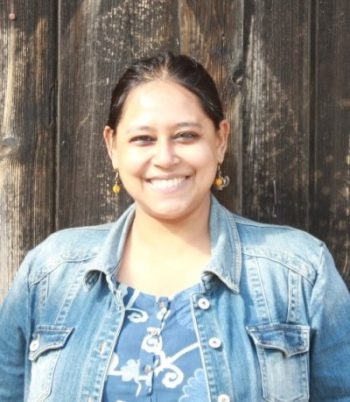
I am a Maitri Fellow at the Australia India Institute, University of Melbourne. My work is funded by the Australian Government’s Department of Foreign Affairs and Trade (DFAT) and administered by the Centre for Australia-India Relations. I was also the inaugural ‘Women in Tech’ Fellow for 2024 awarded by the Australian Consulate Bengaluru and the Australia India Institute.
My research examines how digital public infrastructures reshape experiences of citizenship, welfare, and everyday life in India. Drawing on long-term ethnographic research on Aadhaar-enabled biometric authentication in India’s public distribution system (PDS), I study how infrastructural breakdowns, failures, and repair practices shape access to food security and welfare. I am currently writing on authentication as a socio-technical process shaping substantive citizenship through which identities, entitlements, and everyday activities are verified and governed. My work draws on Science and Technology Studies, Infrastructure Studies, Human Computer Interaction, and South Asian Studies.
Alongside my research on digital infrastructures, I am also studying visual and material cultures in urban and small-town India. This work began when, as a two-wheeler commuter in Bangalore, I started building a digital archive of film fandom expressed through autorickshaw art. My interest in Hindi films and fandom and my experiences of traffic led me to think about autos as forms of urban mobility that produce visual culture and aestheticise the experience of traffic. I have since expanded this work into a larger project that also includes visual practices such as kolam and mehendi as forms of ephemeral visual art practiced by women in domestic spaces that while central to everyday life, receive marginal attention as serious practices of art. This work is supported by an unrestricted grant from Google that I received in 2024 to research visual art and emerging technologies. I am currently collaborating with Aruvu Collaboratory, Bangalore to develop the project.
Previously, I was a faculty member at IIIT Bangalore from 2016–2025, where I taught courses on Qualitative Research Methods and Human-Computer Interaction, guiding students through immersive ethnographic and design research practices. Design work developed with my students on mobile hotspot affordances in smartphones was recognised by Samsung Research and Development India Bangalore (SRIB) and later implemented in Samsung smartphones globally.
In collaboration with my research students, I co-founded and supervised the IIIT Bangalore ACM SIGCHI Student Chapter from 2023–2025. I am also a member of the Asia SIGCHI subcommittee and served as Vice-Chair from 2024–2025.
My research has been supported by fellowships from The Hindu Centre for Politics and Public Policy and grants from Google, the Azim Premji University Research Funding Program, and Mobile World Congress Barcelona.
I hold a bachelor’s degree in Commerce and a master’s degree in Communication Studies from the University of Pune, and a PhD in Communication Studies from The University of Texas at Austin. Prior to joining IIIT Bangalore, I was a researcher with the Human Interactions group at Xerox Research Centre India, Bangalore.
In what now seems like a previous life, I was a journalist with The Indian Express.
I can be reached at preeti [dot] mudliar [at] unimelb [dot] edu [dot] au
A note for students: I am always pleased to hear from people interested in Science and Technology Studies (STS), digital infrastructures, ethnographic research, Human–Computer Interaction, and related areas. I receive many emails from students seeking opportunities to contribute to ongoing projects, research direction, or reading recommendations. I appreciate the interest these messages reflect. At the same time, many of these requests are necessarily broad, making it difficult for me to offer meaningful guidance over email.
Many students who write to me come from engineering or computing backgrounds and hope to learn qualitative or ethnographic methods by contributing to a research project. While I understand the motivation behind these requests, I generally encourage students interested in this path to seek research training through a Master’s program or another setting that includes substantial coursework, fieldwork, and thesis research. Ethnography, and qualitative research more broadly, is best learned through sustained engagement rather than short-term projects. Meaningful mentorship develops through sustained work together over time. For this reason, I am unable to offer informal supervision or individualized mentoring in project work outside formal academic programs.
I also recognize that writing to someone itself can be daunting. Not everyone has had mentors who could explain the unwritten conventions of academic life and many questions about graduate school, research, academic writing, and qualitative methods are rarely addressed explicitly. I encourage you to explore some of the resources created by academics who have generously shared their experience. In particular, the late Raul Pacheco-Vega’s research blog addresses many of the questions students commonly have about graduate school, research, and academic writing. The Teaching section of this website also includes syllabi from courses I have designed and taught, with readings and assignments, which may provide a useful starting point for further exploration.
If, after exploring these resources, you have a specific question about my research or would like to discuss a particular paper, argument, or methodological issue, you are very welcome to write. There is no need for a polished email. A few sentences about yourself, your interests, what you have already explored, and the question you are hoping to discuss are more than enough.